
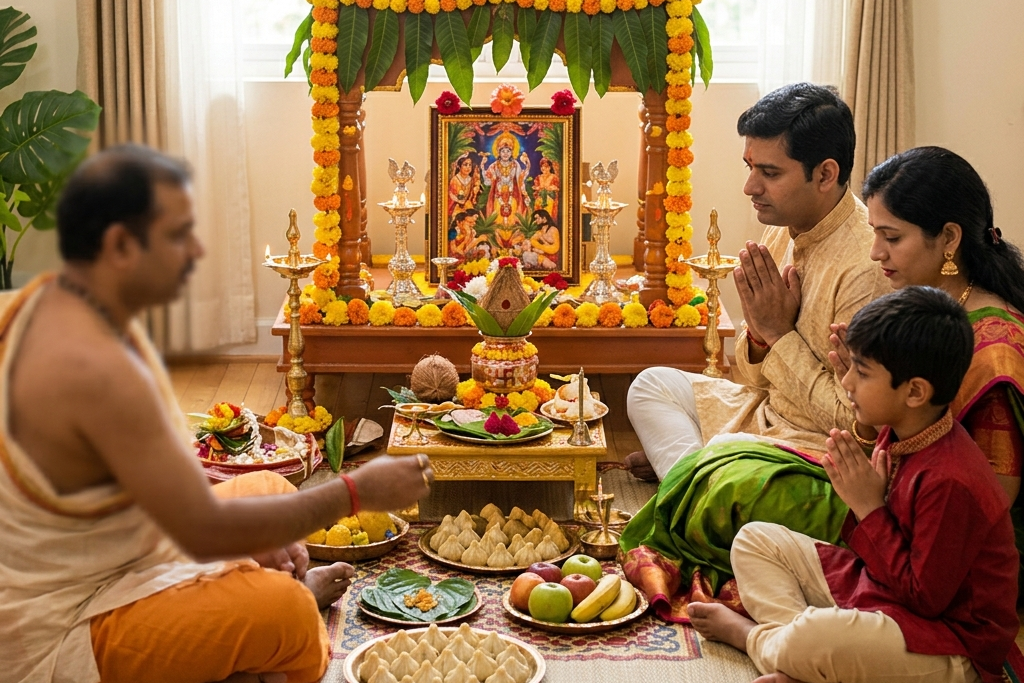
The Spiritual Mandate
The Main Deity: Lord Satyanarayana (An embodiment of Lord Vishnu representing the Eternal Truth).
The Core Purpose: The Satyanarayana Vratham is a powerful ritual of gratitude and devotion performed to overcome obstacles, resolve familial discord, and invite divine grace into a new home or venture. It is a “Sankalpa-driven” (intention-based) pooja that emphasizes that “Truth” is the highest form of God.
The “Phala” (Result):
- Loka Kalyanam: Harmonious energy and peace within the household.
- Santhana Prapti: Blessings for the well-being and prosperity of children and future generations.
- Karya Siddhi: Removal of unforeseen hurdles in career, business, or education.
The Unique Samagri Checklist
While standard items like lamps and matchboxes are covered in our General Setup Guide, the following are essential for this specific guided ritual:
- Specific Photo/Idol: A framed image or idol of Lord Satyanarayana. If possible, a small Vigraha (metal idol) for the Abhishekam (ritual bath).
- Sacred Threads/Clothes: New yellow or gold vastram (cloth) to drape the Peetham (altar). A yellow Thoram (sacred thread) for the performers’ wrists.
- Specific Flowers/Leaves: * Tulasi (Holy Basil) leaves (Mandatory for Vishnu Pooja).
- Mavila Akulu (Mango Leaves) for the Kalasham and Thoranam.
- Banana plants or leaves to decorate the four pillars of the Mandapam.
- Specific Dry Goods: * Sawa (1.25) measurements of Rava (Semolina), Ghee, and Sugar for the Prasadam.
- Pancha-amrutham (Honey, Curd, Milk, Ghee, Sugar).
| Category | Item | Specification / Quantity | Notes |
|---|---|---|---|
| Main Deities & Setup | Lord Satyanarayana Idol/Photo | 1 Unit | Brass, Silver, or a framed picture. |
| Lord Ganesha Idol | 1 Unit | Small idol for the initial puja. | |
| Kalasham | 1 Copper or Brass pot | Approx. 5-7 inches tall. | |
| Peetam (Chowki) | 1 Wooden platform | To place the deities. | |
| Red/Yellow Cloth | 2 Yards | Fresh cotton cloth to cover the Peetam. | |
| Fruits; Flowers & Leaves | Coconuts | 3 Units | With husk (one for Kalash, two for offering). |
| Bananas | 1 Dozen | Must be ripe; used for Prasadam and offering. | |
| Assorted Fruits | 5 Varieties (2 lbs each) | Apples, Grapes, Pears, Oranges, etc. | |
| Flowers | 2-3 Bunches | Loose petals and 2 Garlands (if available). | |
| Betel Leaves (Paan) | 15–20 Leaves | Available at Indian stores; look for fresh green ones. | |
| Betel Nuts (Supari) | 1 Small Packet (approx. 10-12 nuts) | Whole nuts, not pieces. | |
| Mango Leaves | 5–10 Leaves | Used for the Kalash; can be substituted with Ashoka leaves. | |
| Puja Liquids & Powders | Turmeric (Haldi) | 100g (3.5 oz) | For Ganesha and general puja. |
| Kumkum | 50g (1.7 oz) | Vermillion powder. | |
| Sandalwood Powder/Paste | 1 Small tin | High quality (Chandan). | |
| Akshat (Rice) | 2 lbs | White rice mixed with a pinch of turmeric. | |
| Panchamrutam | 1 Bowl | Mix of Milk, Yogurt, Ghee, Honey, and Sugar. | |
| Ghee | 1 Jar (16 oz) | For the lamps and the Homa (if applicable). | |
| Lamps & Incense | Deepam (Lamps) | 2 Units | Brass or Clay (Diyas). |
| Cotton Wicks | 1 Pack (approx. 50 wicks) | Round or long variety. | |
| Agarbatti (Incense) | 1 Pack | Any fragrance like Sandalwood or Jasmine. | |
| Camphor (Karpur) | 1 Small container | For the final Arathi. | |
| Matchbox/Lighter | 1 Unit | To light the lamps. | |
| Prasadam Ingredients | Semolina (Sooji/Rava) | 1.25 Cups | Fine or medium grain. |
| Sugar | 1.25 Cups | Or Jaggery, per family tradition. | |
| Ghee | 1.25 Cups | Clarified butter. | |
| Milk | 1.25 Cups | Whole milk preferred. | |
| Sliced Bananas | 1.25 Cups | Mix directly into the prasadam. | |
| Cardamom Powder | 1 Teaspoon | For flavor. | |
| Miscellaneous Essentials | Coins | 21 Quarters | Used for Dakshina and Kalash. |
| Paper Towels | 1 Roll | For cleaning spills. | |
| Disposable Plates/Bowls | 1 Pack | For distributing Prasadam. | |
| Panchapatra & Uddharini | 1 Set | The small copper cup and spoon for water. |
The Unique Prasadam Recipe: Sawa Bhogam (Sapada Bhakshya)
Name of the Offering: Satyanarayana Prasadam (Rava Kesari/Halwa).
Spiritual Significance: This offering is unique because it follows the Sawa (one and a quarter) rule, symbolizing abundance and the idea that we offer a “measure and a quarter” back to the Divine who gives us everything.
The “Vedic Ratio”: The traditional ratio is 1.25 units of each primary ingredient: 1.25 cups of Semolina, 1.25 cups of Ghee, 1.25 cups of Sugar/Jaggery, and 1.25 cups of Milk.
Click here for the Step-by-Step Satyanarayana Prasadam Recipe
The Ritual Timeline
Your Remote Pandit will guide you through these steps via live video:
- Preparation (15 mins): Arranging the Mandapam (altar) with banana stems and mango leaf thoranams. Establishing the Kalasham (sacred pot).
- Sankalpam: The most critical step where the Pandit guides you to state your name, Gotra, and the specific reason for performing this ritual to align your energy with the divine.
- Core Rituals: * Ganesha & Navagraha Pooja: Clearing the path and seeking planetary alignment.
- Shodashopachara Pooja: 16-step worship of Lord Satyanarayana including Abhishekam and Archana (chanting of 108 names).
- Katha (The Divine Stories): Listening to the five chapters of the Satyanarayana Katha, which explain the significance and miracles of the Vratam through historical Vedic parables.
- Naivedyam & Aarthi: Offering the Sawa Bhogam and performing the Mantra Pushpam (offering of flowers with Vedic chants).
Booking Guidance
Recommended Tithis: Purnima (Full Moon days) are considered most auspicious. However, it can be performed on Ekadashi, Sankranti, or any Saturday/Sunday for convenience.
Duration: Approximately 90 to 120 minutes.
Experience the Divine at Home: Book your Guided Vedic Ritual with a Remote Pandit today to bring the vibrations of a traditional temple into your living room. Our gurus specialize in assisting NRI families in maintaining their cultural roots with precision and devotion.