
Sri Kedareshwara Vratham
Welcome to your virtual sacred space. At Remote Pandit, we bring the ancient, highly auspicious vibrations of the Himalayas directly to your home, wherever you are in the world. Perform the profoundly transformative Sri Kedareshwara Vratham under the step-by-step guidance of our expert Virtual Gurus.
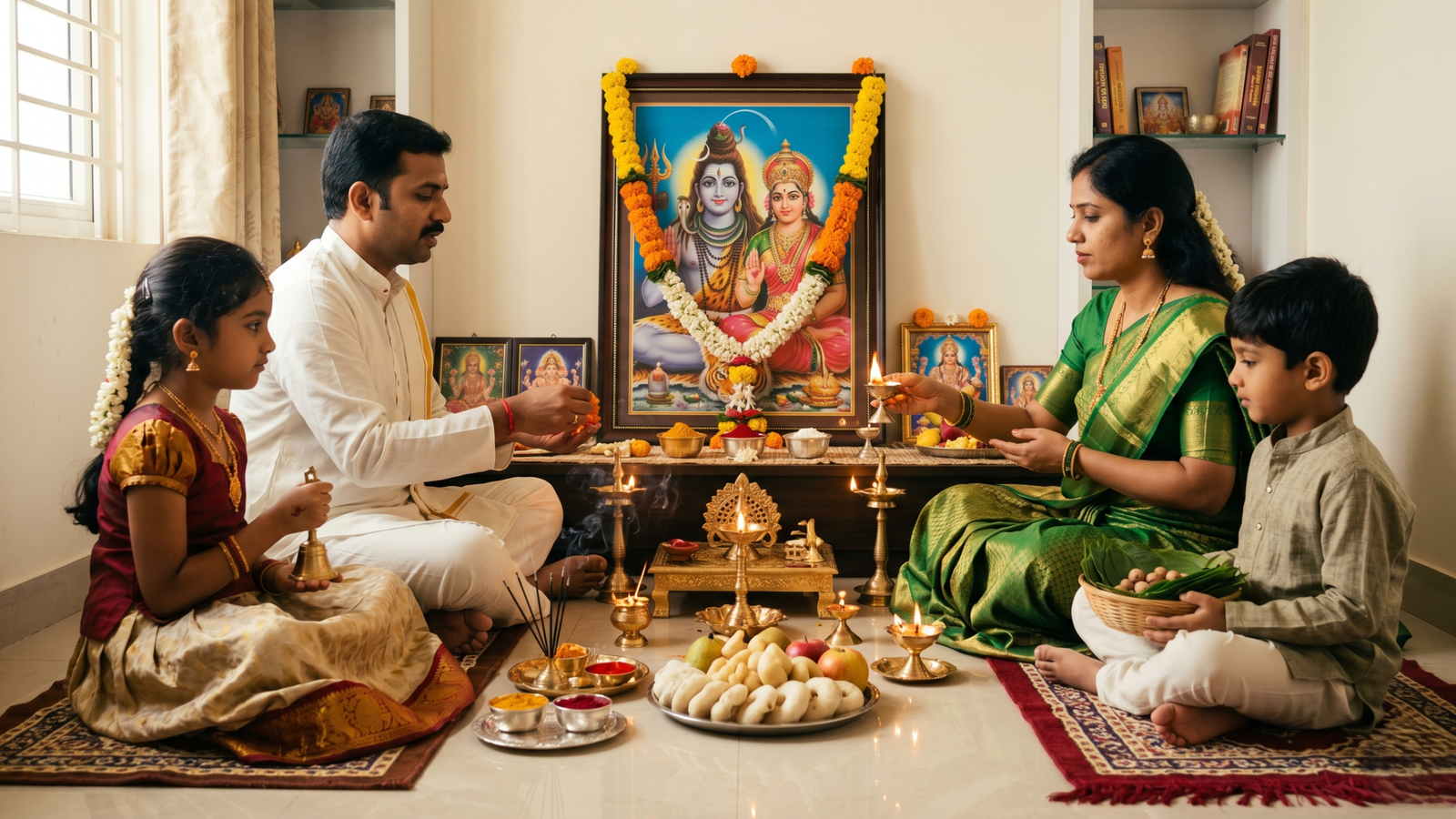
1. The Spiritual Mandate (Unique to this Pooja)
- The Main Deity: Lord Shiva in his divine form as Kedareshwara (the Lord of Mount Kedarnath, often worshipped alongside Goddess Parvati as the unified, supreme form of Ardhanarishvara).
- The Core Purpose: The Sri Kedareshwara Vratham is one of the most powerful, ancient vows mentioned in the Skanda Purana. It was famously performed by Goddess Parvati herself to merge with Lord Shiva, establishing the Ardhanarishvara form. This ritual is observed by families to resolve marital disputes, protect the longevity and health of spouse and children, and invoke total cosmic harmony.
- The “Phala” (Result):
- Ardhanarishvara Sayujyam (Marital & Relationship Unity): Harmonizing relationships, fostering deep mutual understanding between husband and wife, and removing misunderstandings.
- Ayushya Vardhanam (Longevity & Health): Dispelling severe health issues, overcoming major life crises, and granting protective energies to the entire household.
- Aishwarya & Karya Siddhi (Prosperity & Success): Overcoming deep professional blockages, eliminating heavy financial burdens, and securing growth in all aspects of life.
2. The Unique Samagri Checklist
To ensure a seamless Online Pooja experience, please gather these specific ritual items before the session. Standard household items (such as water cups, matchboxes, and plates) are listed separately in our General Setup Guide.
| Item Name (Sanskrit/Telugu) | Description / Significance | Required Quantity |
|---|---|---|
| Siva Parvatula Photo (శివ పార్వతుల ఫోటో) | Portrait of Lord Shiva and Goddess Parvati together | 1 |
| Pasupu (పసుపు) | Turmeric Powder (for the initial Ganesha pooja) | 50g |
| Kumkuma (కుంకుమ) | Vermilion Powder | 50g |
| Gandham (గంధం) | Sandalwood Powder or Paste | A small amount |
| Agarbatti (అగర్ బత్తీలు) | Incense Sticks | 10 |
| Vidi Poolu (విడి పూలు) | Loose Flowers (preferably white flowers or Bilva leaves for Lord Shiva) | A few |
| Tamalapakulu (తమల పాకులు) | Fresh, undamaged Betel Leaves (21 leaves are uniquely used to establish the main Kalasham setup) | 25 leaves |
| Vakkalu (వక్కలు) | Whole Betel Nuts | 20 pieces |
| Prasadalu (ప్రసాదాలు) | Traditional sweet offerings (e.g., Sweet Kudumulu or Boorelu) | Sacred batch |
| Nomu Dharam (నోము దారం) | Sacred red/yellow thread with 21 knots (representing 21 forms of Shiva) | 1 per observer |
| Ganta (గంట) | Puja Bell | 1 |
| Deeparadhana Samagri (ద్వీపారాధన సామాగ్రి) | Main Altar Lamp, cotton wicks, and Sesame oil or Ghee | 1 Setup |
| Karpooram (కర్పూరం) | Camphor for the final Aarthi | A small amount |
| Chillara Paisalu (చిల్లర పైసలు) | Loose Coins (offered as Dakshina and used in the Sankalpam) | 20 coins |
3. The Unique Prasadam Recipe (Short Summary)
- Name of the Offering: Neyyi Kudumulu / Ghee Steamed Dumplings (traditionally prepared as 21 pieces).
- Spiritual Significance: Lord Kedareshwara is offered exactly 21 sweet dumplings during this vratham. The number 21 holds supreme cosmological significance in this ritual, representing the 21 major energies of creation, the 21 forms of Shiva, and the internal pathways of the spiritual body. Offering this sanctified prasadam brings physical vitality and pure spiritual vibrations into the home.
- The “Vedic Ratio”: To make perfect traditional sweet Kudumulu, the ratio of freshly ground rice flour to organic grated jaggery is exactly $1:1$ (by weight).
- Click here for the Step-by-Step Kudumulu Recipe
4. The Ritual Timeline (The Unique Steps)
Your Remote Pandit will guide you virtually through each phase of this highly transformative ritual, ensuring perfect pronunciation of the Sanskrit mantras.
- Preparation (10 mins): Place the Shiva Parvati Photo (శివ పార్వతుల ఫోటో) facing East. Setup the main Kalasham representing Lord Kedareshwara using 21 Tamalapakulu (తమల పాకులు). Arrange your Deeparadhana Samagri (ద్వీపారాధన సామాగ్రి) and prepare the Pasupu (పసుపు) Ganesha cone. Place the sacred Nomu Dharam (నోము దారం) near the deity.
- Sankalpam (5 mins): Under the Virtual Guru’s guidance, hold Tamalapakulu (తమల పాకులు), Vakkalu (వక్కలు), and Chillara Paisalu (చిల్లర పైసలు) in your hands. Recite your name, Gotra, and state your heart’s deepest intentions to invoke Lord Shiva’s supreme grace for your family’s health and happiness.
- Core Rituals (30 mins):
- Ganesha Pooja: Invoking Lord Ganesha in the Pasupu (పసుపు) form to clear all obstacles.
- Kedareshwara Kalasha Pooja: Invoking Lord Shiva into the Kalasham and worshipping Him with Gandham (గంధం), Pasupu (పసుపు), and Kumkuma (కుంకుమ).
- Nomu Dhara Pooja (The 21 Knots): Consecrating the sacred Nomu Dharam (నోము దారం) by offering flowers and chanting 21 specific names of Lord Shiva for each of the 21 sacred knots.
- Katha / Stotram (15 mins): Listen intently to the sacred Kedareshwara Vratha Katha narrated by your Remote Pandit, detailing how Sage Bhringi and Goddess Parvati attained absolute unity. This is followed by the chanting of the powerful Shiva Panchakshari Stotram.
- Naivedyam & Aarthi (15 mins): Ringing the Ganta (గంట) to purify the space, we offer the 21 freshly steamed Kudumulu. The observers tie the consecrated Nomu Dharam (నోము దారం) around their wrists. The ritual concludes with lighting the Karpooram (కర్పూరం) for the grand Mangala Aarthi, capturing the essence of Mount Kailash in your living room.
5. Booking Guidance
- Recommended Tithis: This Guided Vedic Ritual is traditionally performed on Ashwayuja Bahula Amavasya (the highly powerful New Moon day during Diwali). However, it is also highly recommended and exceptionally meritorious when performed on any Monday of the holy Kartika Masam, or during Pradosham timings.
- Duration: Approximately 60 to 75 minutes of live, interactive guidance.
Connect with your roots. Erase your obstacles. Experience divine alignment with Remote Pandit.